
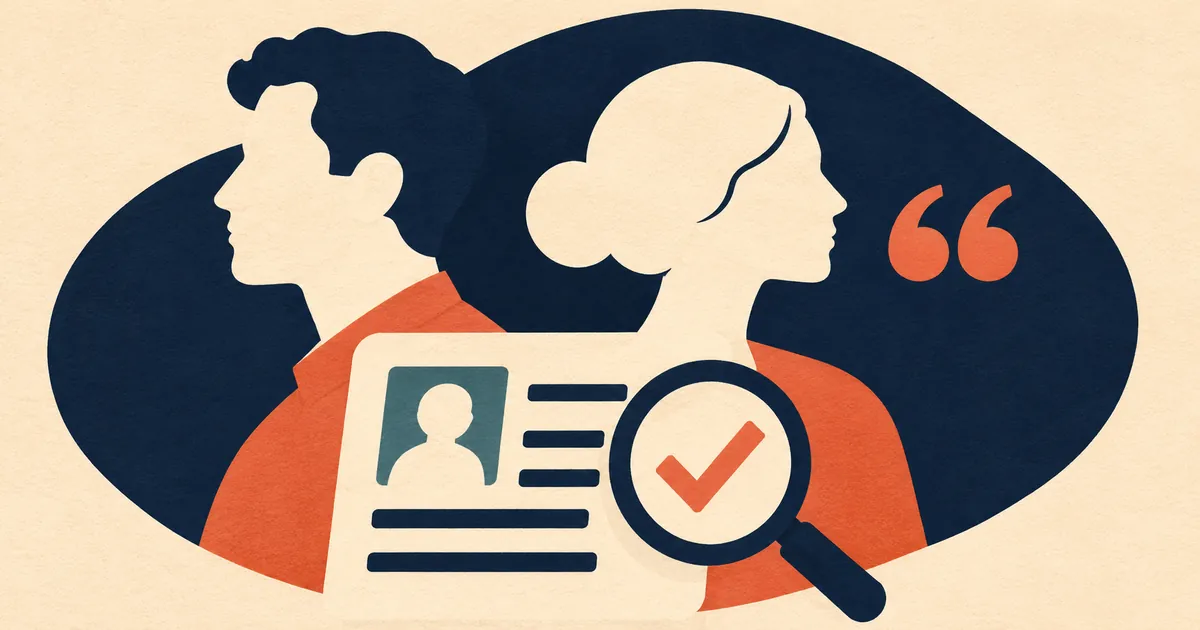
Short answer: A public persona can be documented through the work and accounts deliberately presented to an audience. Connecting it to a private legal identity requires stronger evidence, a clear public-interest reason, and careful harm assessment. Curiosity alone is not enough.
Public Persona vs Private Identity Online
Creators use stage names and controlled identities for many ordinary reasons: memorability, language, safety, boundaries, or separation between work and home. A profile can still be useful by explaining the public role, creative output, official destinations, and evidence limits without trying to unmask the person.
Evidence record for Public Persona vs Private Identity Online
For Public Persona vs Private Identity Online, begin with define the public question and finish with choose the narrower answer. The checkpoints below preserve the evidence and decision path for this specific task.
Define the public question
Ask what a reader needs to understand the work rather than what private detail might attract clicks.
Use self-published identity links
Follow official websites and reciprocal account links without jumping to unrelated accounts that share a face or name.
Require a public-interest test
Consider whether the identity connection prevents concrete harm or explains accountable public conduct.
Assess collateral exposure
A claim can reveal relatives, addresses, workplaces, or records belonging to people who did not seek attention.
Choose the narrower answer
Publish the useful professional context and leave unsupported private identity claims out.
Public Persona vs Private Identity Online in practice
A creator's public site lists a stage name, portfolio, contact route, and official channels but no legal surname. That is enough to verify the public work. Searching property records or relatives to fill the blank adds risk without improving the reader's understanding of the creator's output.
Related reading for Public Persona vs Private Identity Online
source-checked public figure profiles show how the evidence labels work on real profile pages; Olivia Casta source review demonstrates how limited-source creator claims are separated from repetition; and Pikabu Monster culture library collects the site's researched screen, costume, lore, and visual design guides.
Decision test for public persona vs private identity online
The test is relevance and consent, not curiosity. Public work, credited roles, official statements, and disclosed professional accounts can explain a persona without exposing relatives, home details, private records, or speculative identity links. Ask whether the detail helps readers understand the documented work and whether a responsible source made it public in that context. If the answer depends on facial comparison, private-account clues, or contact with uninvolved people, stop. A narrower profile can be more accurate and more respectful than a comprehensive-looking dossier.
Limits of the public persona vs private identity online method
Do not use face-matching software, leaked databases, intimate content, or private family profiles to establish identity. Do not repeat a doxxing claim merely to deny it.
Sources used for Public Persona vs Private Identity Online
Reference set for Public Persona vs Private Identity Online: material supporting the profile research decisions on this page.