Beginner Cosplay Planning Guide
Plan a first cosplay by choosing recognition cues, setting a budget, testing movement, and checking venue rules before building.
Read Beginner Cosplay Planning Guide
Choose a source-checked profile, practical culture guide, or responsible zodiac reference.
Fifty substantial guides turn common search questions into repeatable methods. Follow a source trail, plan a safer costume, test visual readability, or use zodiac symbolism without mistaking it for evidence.
Choose a working path through the public-figure research library, practical costume reference guides, visual design methods, or responsible zodiac sign guides.

10 focused guides with distinct questions, methods, examples, and source boundaries.
Plan a first cosplay by choosing recognition cues, setting a budget, testing movement, and checking venue rules before building.
Read Beginner Cosplay Planning Guide
Take useful body, garment, armor, and movement measurements so costume pieces fit together and remain wearable.
Read Cosplay Measurement Checklist for Better Fit
Review materials, edges, mechanisms, visibility, transport, and convention inspection requirements before carrying a prop.
Read Cosplay Prop Safety ChecklistCompare drape, stretch, weight, sheen, durability, comfort, and sewing difficulty before buying costume fabric.
Read How to Choose Fabric for CosplayCreate a costume reference board that separates confirmed views, inferred construction, color notes, and unresolved details.
Read How to Build a Cosplay Reference BoardPrepare fabric, armor, makeup, footwear, electronics, and repair supplies for heat, rain, wind, and long event days.
Read How to Weatherproof a Cosplay CostumePack a compact, venue-safe repair kit matched to your costume materials, likely failures, and dressing needs.
Read Cosplay Convention Repair Kit ChecklistCompare screen-accurate replicas, wearable interpretations, closet cosplay, and original variants by goal, budget, and venue.
Read Replica vs Inspired Cosplay: How to ChooseEstimate materials, tools, shipping, tests, travel, repairs, and contingency costs before committing to a costume.
Read How to Make a Realistic Cosplay BudgetCapture front, back, side, movement, scale, and construction details so a finished cosplay can be reviewed or repaired.
Read How to Photograph a Cosplay for Reference10 focused guides with distinct questions, methods, examples, and source boundaries.

Learn how to check an influencer age claim using dated first-party records, independent sources, and a clear evidence log.
Read How to Verify an Influencer's Age
Use account links, identity continuity, representation, and platform context to distinguish an official profile from a fan account.
Read How to Find an Official Social Media Account
A practical reverse image search workflow for finding earlier uses, original context, altered crops, and misleading identity claims.
Read How to Reverse Image Search a Profile PhotoUnderstand what official websites, interviews, news reports, databases, and copied biographies can reliably establish about a person.
Read First-Party vs Independent Sources for ProfilesLearn why public net worth figures vary, which records can support a financial claim, and when an estimate should be omitted.
Read Why Celebrity Net Worth Estimates DisagreeCheck birthday claims with official records, dated interviews, professional biographies, and a method that avoids circular sourcing.
Read How to Verify a Public Figure's BirthdayUse bylines, citations, update dates, source chains, and claim-level checks to decide whether an online biography is trustworthy.
Read How to Read an Online Biography CriticallyConfirm sponsorships through disclosures, brand channels, campaign pages, and dated evidence instead of relying on tags alone.
Read How to Verify an Influencer Brand PartnershipCreate accurate, dated audience snapshots without presenting changing follower totals as permanent biographical facts.
Read How to Track Social Media Follower CountsLearn where responsible profile research should stop when a public persona does not fully disclose a person's private identity.
Read Public Persona vs Private Identity Online10 focused guides with distinct questions, methods, examples, and source boundaries.

Build an accurate filmography with role credits, release context, source hierarchy, and clear treatment of cameos and voice work.
Read How to Research an Actor's Filmography
Verify who said a quote, where it appeared, what question prompted it, and whether edits or reposts changed its meaning.
Read How to Check an Interview Quote in Context
A repeatable method for checking movie trivia against the film, production records, interviews, and publication dates.
Read How to Fact-Check a Viral Movie ClaimUnderstand canon, interpretation, headcanon, fan theory, adaptation, and continuity without flattening them into one category.
Read Canon vs Headcanon: What Is the Difference?Locate the scenes, dialogue, books, codex entries, patch notes, and official references behind a fandom lore claim.
Read How to Find Primary Sources for Fandom LoreLearn how retroactive continuity works, how it differs from a reveal or adaptation change, and how to document it accurately.
Read What Is a Retcon? A Practical Lore GuideUse fandom wikis effectively by checking citations, revision history, continuity labels, and the original sources behind summaries.
Read How Reliable Are Fandom Wikis?Compare contradictory dialogue, books, editions, and creator statements with a source hierarchy that keeps uncertainty visible.
Read How to Resolve Conflicting Lore SourcesAnswer a lore question directly while controlling spoiler depth with scope labels, layered evidence, and clear reader choices.
Read How to Write a Spoiler-Safe Lore GuideCompare a film, series, game, comic, or novel adaptation without mixing separate continuities or treating every change as an error.
Read Adaptation vs Original Canon: How to Compare Them10 focused guides with distinct questions, methods, examples, and source boundaries.

Improve avatar recognition with silhouette, focal contrast, crop space, and real 128, 64, and 32 pixel tests.
Read How to Make an Avatar Readable at Small Sizes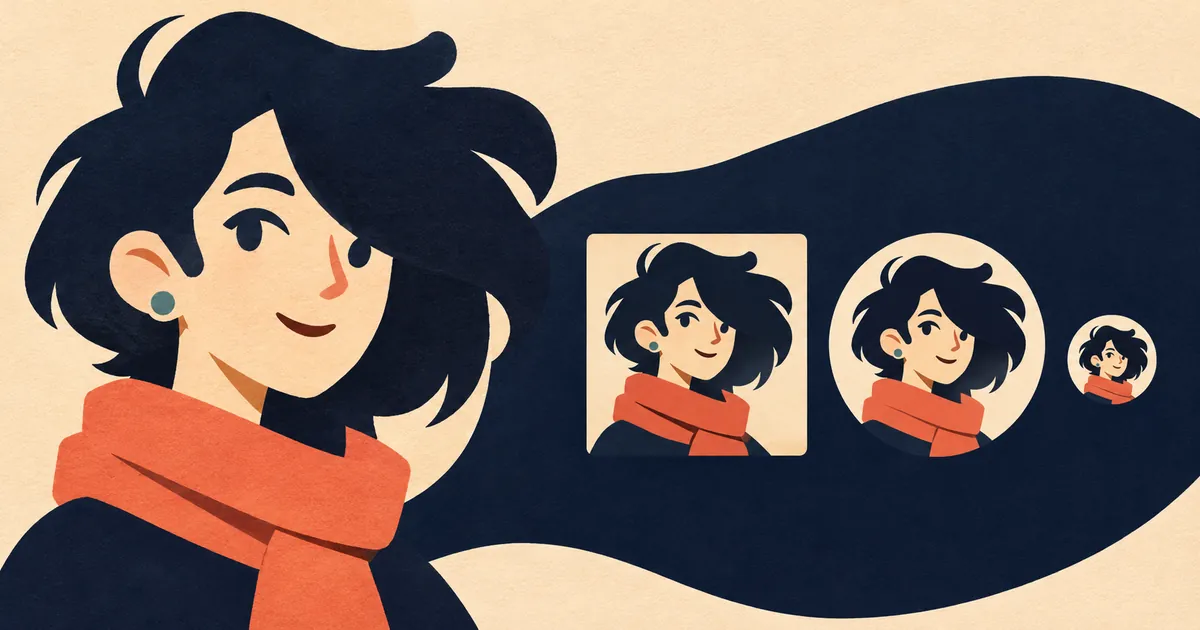
Design one profile image that survives circular masks, square cards, corner crops, and small notification views.
Read Circle vs Square Avatar Crop Guide
Use value, hue, saturation, and background checks to keep profile images clear across light and dark interfaces.
Read Avatar Color Contrast GuideGuide the viewer through silhouette, face, gesture, costume, and detail by assigning each feature a clear level of importance.
Read Visual Hierarchy in Character DesignCreate an anime-style avatar with a strong crop, expressive focal feature, clean value groups, and readable small-size export.
Read Anime Avatar Design ChecklistPrepare a clean square master, responsive derivatives, file formats, and small-size checks for profile pictures.
Read Profile Picture Size and Export GuideChoose original, commissioned, licensed, or public-domain avatar artwork and preserve the permissions needed for reuse.
Read How to Make a Copyright-Safe AvatarStudy composition, color, edges, texture, shape language, and process while developing an original visual solution.
Read How to Analyze an Art Style Without CopyingDifferentiate a cast through silhouettes, proportions, palettes, voices, roles, and repeated behavior without visual clutter.
Read How to Design a Recognizable Character CastExamine value grouping, edges, texture, color temperature, focal detail, and interface scale in painterly game visuals.
Read How to Analyze Painterly Game Art10 focused guides with distinct questions, methods, examples, and source boundaries.

Understand common tropical zodiac date ranges, why boundary dates vary, and how to avoid claiming certainty from a generic date chart.
Read Zodiac Sign Dates and Cusp Boundaries
Compare the symbolic roles of Sun, Moon, and rising signs, the birth data each needs, and the limits of personality claims.
Read Sun, Moon, and Rising Signs Explained
Learn how fire, earth, air, water and cardinal, fixed, mutable combine into twelve distinct symbolic sign patterns.
Read Zodiac Elements and Modalities ExplainedUse horoscope language as a structured reflection prompt without treating it as evidence of future events or hidden facts.
Read Astrology for Reflection vs PredictionTurn a weekly zodiac prompt into a short observation, action, evidence, and review cycle without treating it as a forecast.
Read Weekly Horoscope Journal MethodCompare astrology's symbolic traditions with astronomy's scientific study of space, evidence, prediction, and testing.
Read Astrology vs Astronomy: Key DifferencesCompare sign symbolism by element, modality, and practical prompts without stereotyping people or claiming fixed compatibility.
Read How to Compare Zodiac Signs ResponsiblyUnderstand why exact birth time and location can be sensitive, how chart tools handle inputs, and when approximate data is enough.
Read Birth Chart Data and PrivacyReplace fixed compatibility percentages with practical questions about communication, boundaries, routines, and shared decisions.
Read Better Questions Than Zodiac Compatibility ScoresCreate engaging horoscope prompts with transparent limits, practical actions, varied sign logic, and no harmful predictions.
Read How to Write a Responsible Horoscope