
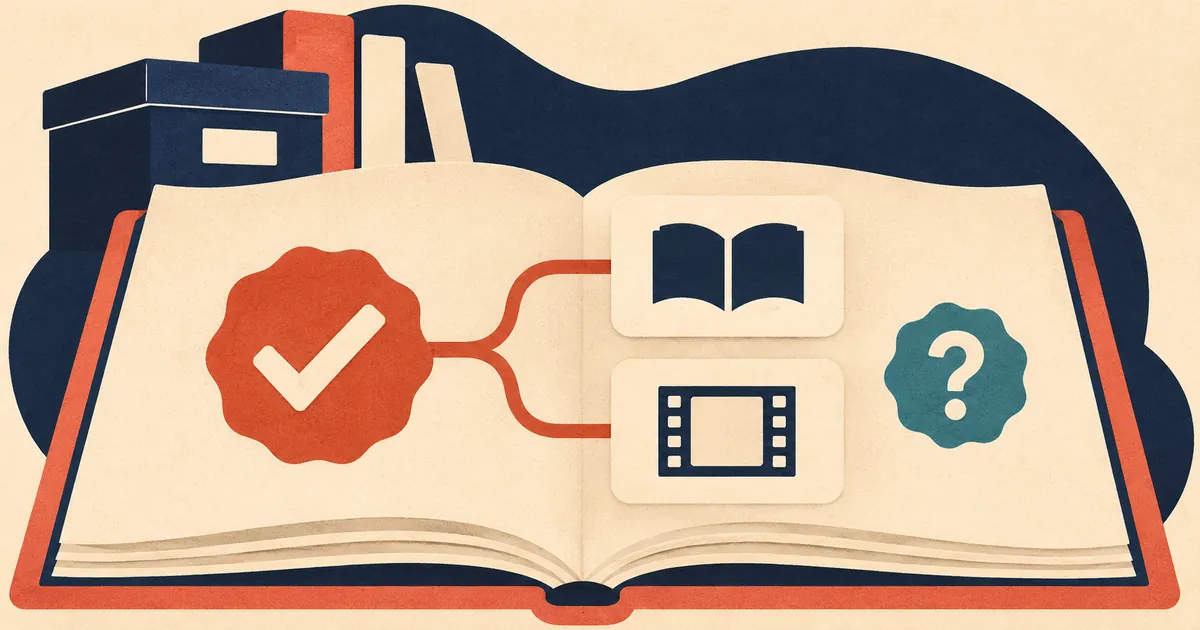
Short answer: Resolve a lore conflict by confirming that the sources address the same continuity and proposition, then compare their dates, authority, speaker knowledge, and later editorial status. Sometimes the correct result is two unresolved accounts, not a forced winner.
How to Resolve Conflicting Lore Sources in practice
One source may call a transformation voluntary while another character describes it as punishment. Both could be true from different perspectives, or one speaker could be wrong. The article should not collapse motive, mechanism, and moral judgment into a single contradiction.
Why Resolve Conflicting Lore Sources
Contradictions can be intentional, especially when fictional speakers have incomplete information. They can also result from translation, production error, a later retcon, or separate creative teams. A good guide identifies the type of conflict before ranking sources.
Evidence record for How to Resolve Conflicting Lore Sources
For How to Resolve Conflicting Lore Sources, begin with write both claims neutrally and finish with preserve the remainder. The checkpoints below preserve the evidence and decision path for this specific task.
Write both claims neutrally
Remove debate language and state exactly what each source says.
Match the subject
Check that names, events, timelines, and versions refer to the same thing rather than similar concepts.
Evaluate the speaker
Distinguish omniscient narration from dialogue by a character who may lie, guess, or repeat legend.
Look for editorial resolution
Later reference books, patches, official FAQs, or sequels may clarify which account governs current continuity.
Preserve the remainder
After resolving one part, list what the evidence still does not establish.
Decision test for how to resolve conflicting lore sources
Conflicts become manageable when each statement is placed in a source matrix. Record continuity, edition, publication date, speaker, and whether the claim comes from the work, a creator, marketing, or a licensed reference. Some conflicts disappear when two sources describe different timelines or versions.
Others remain genuine. Rank authority only after defining the question, and do not force a single answer when the publisher has left the issue unresolved. A documented conflict is more informative than an unsupported attempt at harmony. End with a dated conclusion that names the controlling version and lists the evidence that could change it.
Related reading for How to Resolve Conflicting Lore Sources
Perturabo canon evidence guide compares sources that fans often quote without their publication context; fandom lore and canon hub keeps primary canon, licensed reference material, and interpretation in separate layers; and Alice in Genshin Impact canon guide maps a character whose story is distributed across dialogue and events.
Limits of the how to resolve conflicting lore sources method
Avoid voting by popularity. Search volume, forum consensus, and repeated wiki wording do not outweigh a primary source, though they can reveal where readers need clearer explanation.
Sources used for How to Resolve Conflicting Lore Sources
Reference set for How to Resolve Conflicting Lore Sources: material supporting the screen and fandom research decisions on this page.