
Build a canon record that survives edition changes
Write the disputed claim in one sentence, then create separate rows for primary narrative text, current publisher summaries, licensed reference material, and community interpretation. Record the title, edition, date, exact wording, and what the source can establish. A later source may clarify or revise an earlier ambiguity, but popularity does not move a community summary higher in the evidence order.
Track continuity and time period as separate fields. A statement can be authentic to one edition or point in the fictional chronology without answering the same question everywhere. When two official sources appear to conflict, quote the narrow point of conflict and preserve both dates before proposing an explanation. The honest result may be confirmed, contradicted, continuity-dependent, or unresolved. It should not be forced into a cleaner answer than the record supports.
- Name the exact continuity and edition.
- Save the wording instead of relying on a wiki summary.
- Distinguish a depicted event from a later character or narrator claim.
- State what evidence would change the current verdict.
Is Perturabo a Daemon Prince key points
- Do not use the lack of a current miniature as proof that the story status is unconfirmed.
- Separate a publisher's direct statement from a fan reconstruction of appearance.
- Horus Heresy novels show Perturabo before and during the rebellion, not one complete visual answer for the later era.
- Edition, publication date, and exact wording matter when reconciling lore summaries.
Source strength for this question
| Source | Can establish | Cannot establish by itself |
|---|---|---|
| Codex or campaign background | Setting status and dated publisher wording | Every step of an unseen transformation |
| Black Library novel | Events, motives, dialogue, and chronology in that work | A later appearance the story does not describe |
| Official miniature or reveal | The released visual design and product context | That every older description is erased |
| Publisher article | A useful official summary and reading path | Details omitted from the summary |
| Fan art or conversion | A creative interpretation | Canon appearance or release plans |
The short answer
Yes, the later Warhammer 40,000 background has described Perturabo as a Daemon Prince or Daemon Primarch. The dispute often arises because readers ask two questions at once. One is whether published background gives him daemon status. The other is what his final form looks like and exactly how the transformation occurred.
The first has direct support in official material across the setting's history. The second remains less visually settled than characters with a current centerpiece miniature, a detailed reveal campaign, and a single widely reproduced modern design.
Why the miniature question causes confusion
Warhammer lore is not limited to models currently sold. Novels, codex background, campaign books, licensed audio, and publisher articles all contribute different kinds of information. A missing or old miniature can make a character feel less confirmed to a visually oriented fan, but product availability is not a canon test.
The reverse is also true: a model can settle one visual design for an edition without answering every narrative question. Use story and background sources for status, and model releases for the appearance they explicitly show.
What the Horus Heresy material establishes
Black Library's Perturabo: The Hammer of Olympia presents the Primarch's youth, Great Crusade campaigns, resentment, and return to Olympia. Angel Exterminatus places him alongside Fulgrim during a major step in Fulgrim's transformation. Those books are important for motive, relationships, and the road into rebellion.
They should not be cited as if their product descriptions alone narrate Perturabo's entire later transformation. A reading path can explain development without pretending that one novel answers a later-era design question it was not written to answer.
Daemon Prince, Daemon Primarch, and patron language
Fans often use Daemon Primarch to distinguish an ascended Primarch from other Daemon Princes. The labels can overlap in ordinary discussion. A separate question is allegiance to one Chaos God versus Chaos Undivided. That issue should be tied to the exact source and its date, not inferred from armor color or Legion behavior.
Iron Warriors themes of industry, siegecraft, bitterness, and controlled use of warp power influence visual interpretations, but a theme is not a quotation and a fan palette is not proof of patronage.
Canon claim checklist
- Write the exact claim before searching.
- Record title, publisher, edition or date, and the relevant wording.
- Separate character status, transformation chronology, patron allegiance, and appearance.
- Trace images to their first attributable upload.
- Label inference and fan design in the sentence where they appear.
How to evaluate a supposed official image
Trace the image to a publisher, product page, book credit, or named artist. Reverse image search can reveal that a frequently reposted image began as fan art, a conversion, a game modification, or an unrelated armored figure. Check whether a caption actually names Perturabo.
Cropped signatures and storefront prints are warning signs, not evidence of official status. If the source cannot be found, describe it as unattributed fan imagery and do not use it to define the character's canonical body, armor, weapons, or scale.
A responsible way to design fan art
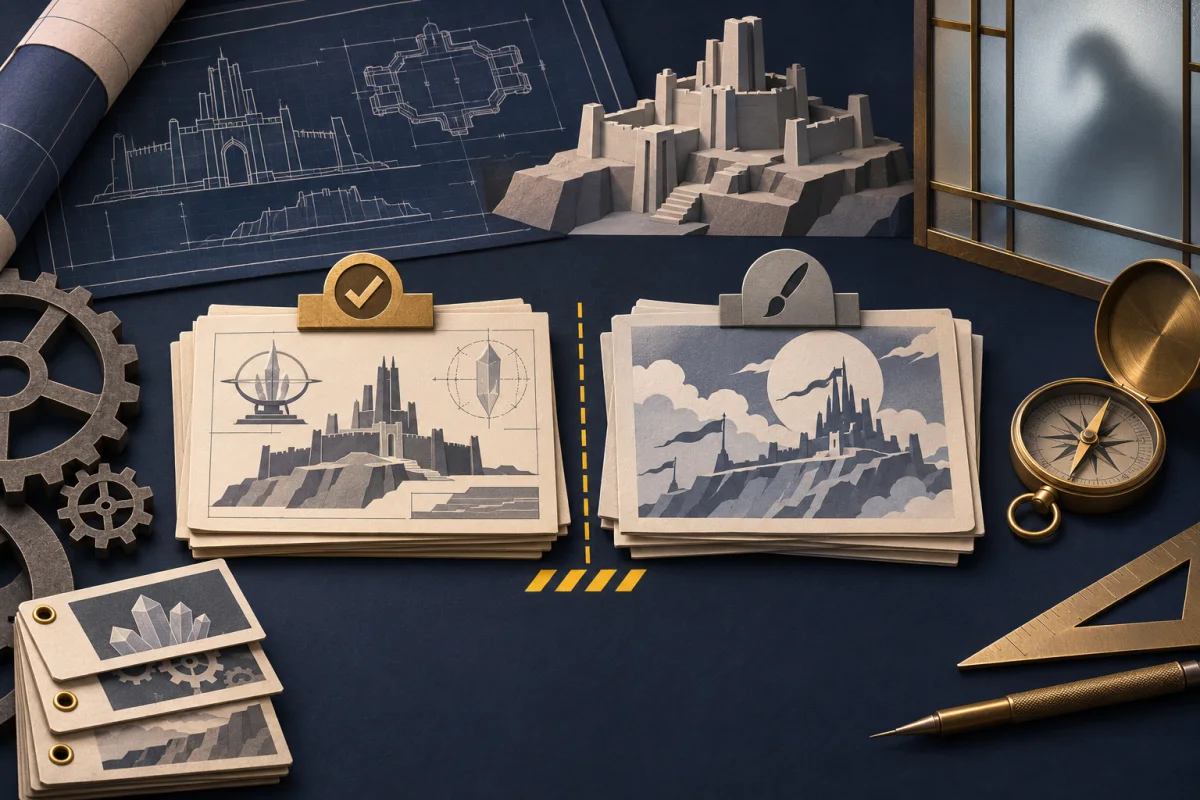
Begin with confirmed associations such as the Iron Warriors, siege engineering, architecture, Olympia, and the character's established pre-ascension history. Then label new physical features as your interpretation. Keep a source board divided into confirmed text, official pre-transformation visuals, general daemon design language, and invented choices.
This makes the work stronger because viewers can see the reasoning without mistaking it for a leak. Avoid adding a fake codex frame, publisher logo, or caption that would make concept art look official.
What would materially update this guide
A new Games Workshop reveal, a current codex passage with more specific language, an official miniature, or a Black Library story centered on the transformation would justify a substantive update. A retailer rumor, anonymous social post, or model-conversion photograph would not.
Update notes should state exactly what changed: status wording, chronology, patron language, appearance, or product availability. Until then, the honest answer is firm about the broad status and cautious about the unresolved visual details.
Sources and how they were used
Official synopsis and reading context for Perturabo's early life, Great Crusade role, and return to Olympia.
Official synopsis for the Fulgrim and Perturabo expedition during the Heresy.
Official anthology description and reading path for Primarch stories, including Perturabo.
The evidence labels used for canon, interpretation, and generated visuals.
Questions that remain after the main answer
Is Perturabo confirmed as a Daemon Prince?
The broad later-era status is established in published Warhammer background. The site does not treat a missing current centerpiece model as a reversal of that status.
What does Daemon Perturabo look like?
There is no single current visual reference with the same public clarity as some released Daemon Primarch miniatures. Many popular images are interpretations, so they need source labels.
Which book should I read first?
Perturabo: The Hammer of Olympia is the focused character study. Angel Exterminatus is important for his Heresy-era relationship with Fulgrim. Neither should be reduced to a substitute for the entire later setting.
For another guide built around incomplete story evidence, compare the Alice in Genshin Impact lore guide. The Arthur Morgan hat guide demonstrates a related distinction between game models, promotional art, and fan descriptions.
Correction or stronger source for Is Perturabo a Daemon Prince?
Send the sentence from this Is Perturabo a Daemon Prince guide and the strongest original source that addresses it. We record material changes without turning interpretation into fact.
Read the corrections process