
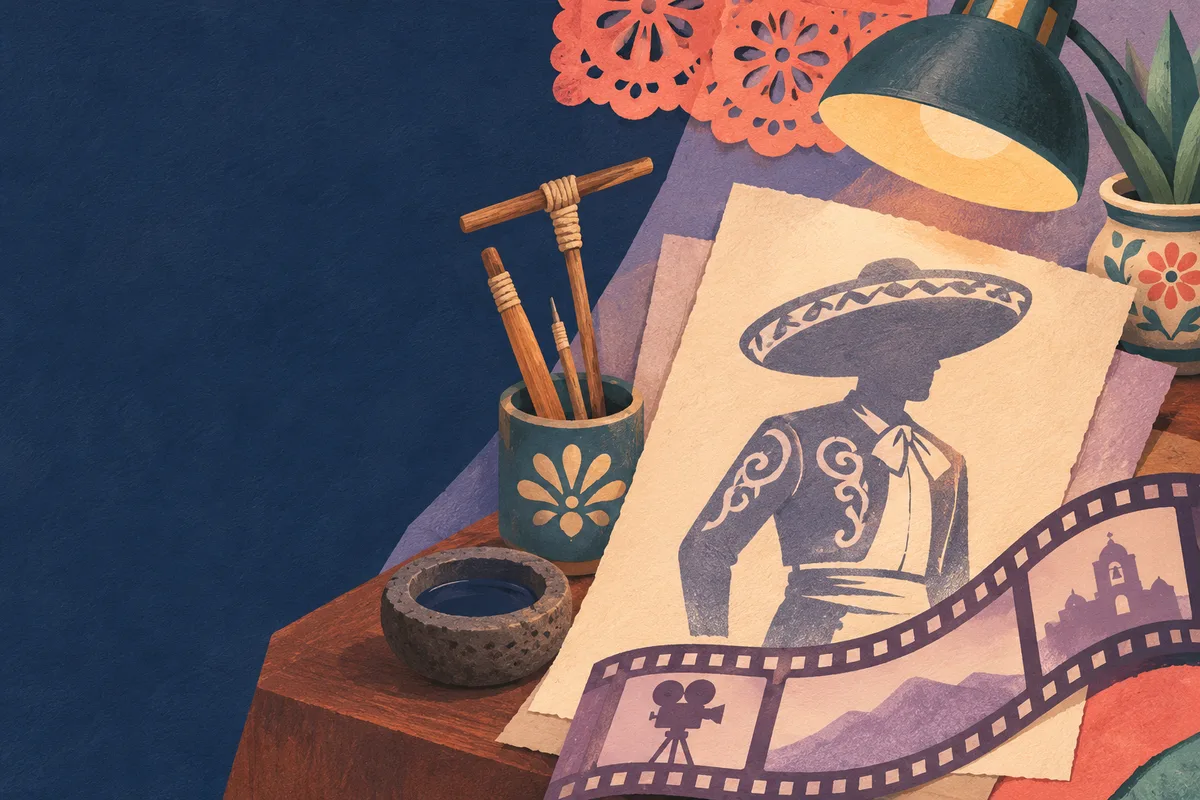
A source-by-source test of the tattoo claim
The useful way to test this story is to split one viral sentence into separate claims. The tattoo depicts a charra. The design existed before Danny Trejo met Salma Hayek. Hayek later described the figure as looking like her. Those statements can all be true at the same time, while the stronger claim that Trejo commissioned a portrait of Hayek remains unsupported by the interviews cited on this page.
Start with the speaker and the exact point each source can establish. Trejo is the primary source for the design, its history, and the word he uses for the figure. Hayek is the primary source for her memory of their meeting and the resemblance. Neither account needs a dramatic added motive. A reliable summary preserves the distinction between the subject of an artwork and a resemblance noticed years later.
- Write the smallest claim that needs checking.
- Match each part of the claim to the person who could know it directly.
- Keep resemblance, inspiration, and commissioned portrait as different claims.
- Remove details that appear only in later retellings without attribution.
Danny Trejo Salma Hayek tattoo key points
- The central figure is described by Trejo as a charra.
- The tattoo predates his meeting with Salma Hayek.
- Hayek's story concerns an unexpected resemblance, not the commissioning of a portrait.
- Direct interviews are more reliable here than image captions and copied celebrity trivia.
The short answer
Danny Trejo did not commission a Salma Hayek portrait for his chest. In a later tattoo interview, he calls the central figure a charra. The large design was made years before he met Hayek. The enduring Salma Hayek label comes from a funny first-meeting story and a resemblance, not from the tattoo's original subject.
Why people call it the Salma Hayek tattoo
Hayek has told the story of Trejo opening his shirt when they met and showing her a woman who looked remarkably like her. The Graham Norton Show published the segment in 2016.
That anecdote is direct evidence that both performers recognized the resemblance, but it does not change the design into a portrait created from Hayek's image.
Claim and evidence map
| Claim | Best evidence | Editorial decision |
|---|---|---|
| The woman was designed as Salma Hayek | No direct support located | Do not state as fact |
| Hayek noticed a resemblance | Hayek's televised account | Supported as her recollection |
| Trejo calls the figure a charra | Trejo's tattoo interview | Supported first-party description |
| The tattoo appears in screen roles | Visible performances and Trejo interviews | Describe without assigning one meaning to every role |
What a charra is
Charra is the feminine form of charro and refers to a participant in Mexico's equestrian tradition. The broad hat makes the figure immediately legible, which is one reason the image remains recognizable even when briefly visible on screen.
The tattoo should be described as Trejo's specific personal design, not used as a generic symbol for all Mexican women or traditions.
How the tattoo was made
Trejo has repeatedly described the chest piece as a long process. In mitú's tattoo interview, he says it took about three years. Other interviews connect the work with a longtime friend and with hand-poked tattooing during incarceration.
Retellings often add dramatic details, so the safest account keeps the elements Trejo has stated directly and labels secondary versions as such.
Why the tattoo became part of his screen identity
The design appears in numerous roles because it is Trejo's real tattoo rather than ordinary costume makeup. Its scale, placement, and recognizable silhouette reinforced the visual identity casting directors already associated with him. That does not mean every character carrying it has the same biography or symbolism.
A quick claim-checking guide
When an image is labeled Danny Trejo's Salma Hayek tattoo, ask whether the source says portrait or resemblance. Prefer interviews where Trejo discusses the charra and where Hayek tells the meeting story. Avoid pages that silently turn a joke into a claim that he copied her face before meeting her.
The people behind the repeated screen story are covered separately in the Danny Trejo career profile and the Salma Hayek career profile, which keep their broader public work distinct from this one anecdote.
Questions that remain after the main answer
Is the tattoo literally Salma Hayek?
No reliable direct account says it was created from Hayek. The supported story is that she later noticed a striking resemblance.
Why is charra the useful term?
It is the term Trejo uses in his own tattoo interview and it identifies the Mexican equestrian figure more accurately than a celebrity label.
Can a photograph settle the question?
A photograph can show resemblance and placement, but it cannot establish the artist's original subject or intent without testimony or records.
How to check a viral tattoo claim
- Find the earliest direct interview, not the newest summary.
- Separate who designed the image from who later resembled it.
- Use the subject's own description for the central figure.
- Keep cultural terminology specific and sourced.
Sources and how they were used
Direct video and transcript in which Trejo calls the figure a charra and discusses the time required.
Hayek's own telling of the resemblance and first-meeting story.
Direct interview context about the chest tattoo, his friend, and his screen image.
Career context and film record.
Correction or stronger source for Danny Trejo Salma Hayek tattoo?
Send the sentence from this Danny Trejo Salma Hayek tattoo guide and the strongest original source that addresses it. We record material changes without turning interpretation into fact.
Read the corrections process